The question is “What will A.I. do to jobs?” And the answers come from right, left and center, from tech CEOs to academic economists to Steve Fucking Bannon — yes, that Steve Fucking Bannon.
It’s smartly reported and cleverly written and the accompanying graphics from Stephan Dybus are top notch.
You will probably not find the story comforting, as it considers the irksome human factor’s effects, if any, upon the Rise of the Machines. The long and the short of it is that where job security in Meatworld is considered, A.I. will either be just ducky or something like a pickleball dustup in Florida.
To a journalist, one day looks pretty much the same as any other.
There’s someone getting knifed, and someone doing the knifing, and someone writing up a short for the Metro page off the police report. Possibly you.
You work odd hours — say, 10 a.m. to 7 p.m., or maybe 1 p.m. to 10 p.m., or even 4 p.m. to whenever the press runs if you’ve gotten tired of writing up shorts for the Metro page and moved over to the copy desk, where almost nobody wears a tie and everybody drinks lunch. Your days off will be something like Tuesday and Wednesday, and odds are that you will clock in for at least 60 percent of the major holidays.
“So, it’s Friday, huh? Who gives a shit? I need art for the Metro page. Did the cops give up a mugshot of our slasher?”
Oh, wait: It’s not just Friday. It’s Friday the 13th.
Nobody really knows how Friday the 13th came to give everyone the willies bad enough to justify a dozen slasher flicks that grossed $908.4 mil’ at the box office. Wikipedia says maybe Loki being the 13th guest at a gods’ dinner party that went sideways had something to do with it, but that sounds like Martha Stewart pitching a project to Marvel Studios, and what great good fortune for the cinematic arts it would be if all the superhero franchises went to hell with Jason and stayed there.
Anyway, I decided to try my luck today and went for a trail run (13-minute miles), followed that up with three sets of 13 reps of each of the inconsequential resistance exercises I perform irregularly, and finally took a 13-minute shower. And what happened?
Herself and a visiting pal came back from a day of estate sales and lunch with three fat slices of cake — carrot, coffee, and chocolate cherry — to chase the remains of the pozole verde I made yesterday.
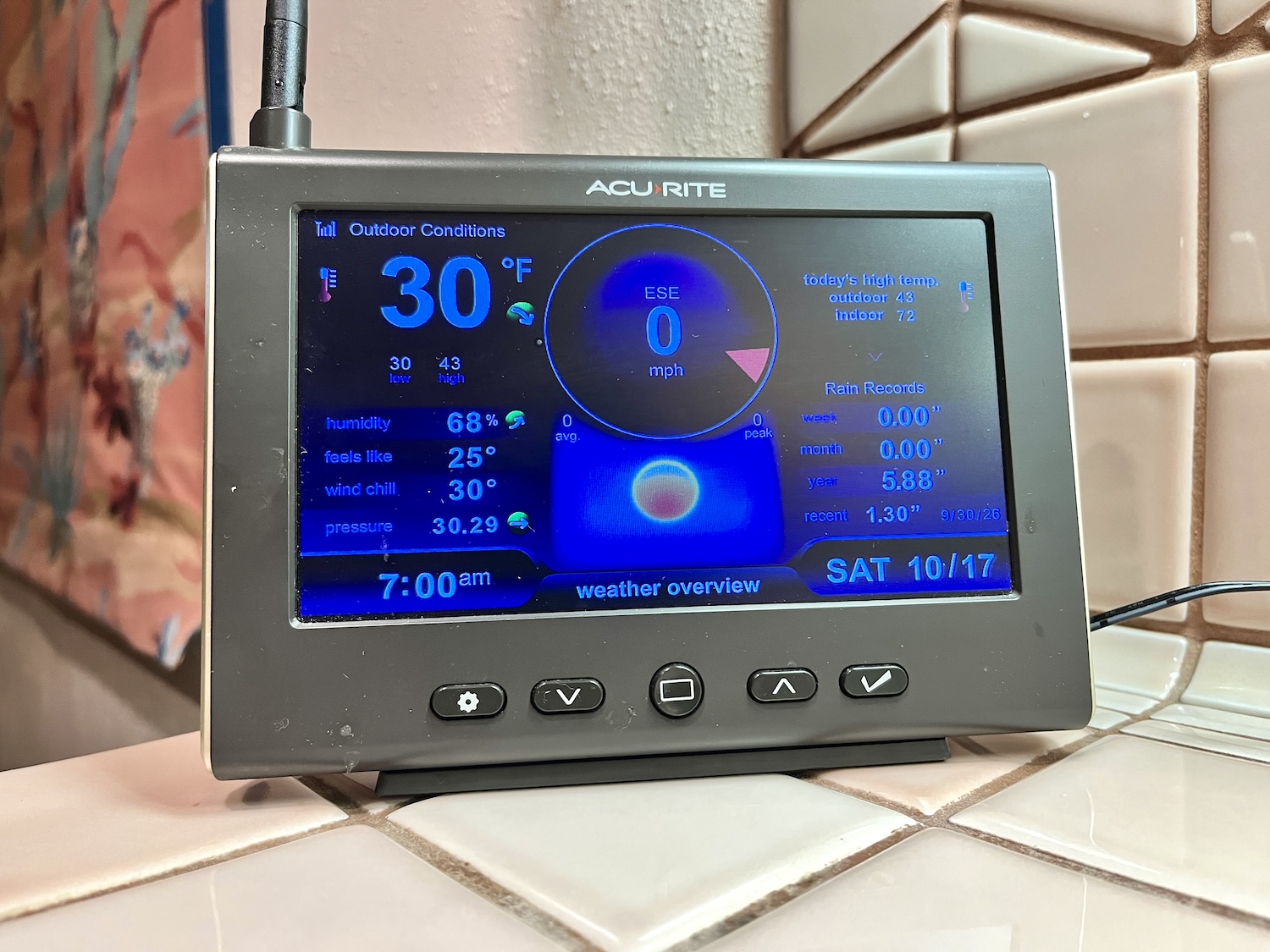
68° yesterday, maybe 63° today … hoo-lawd, this ain’t no way to run a climate, bruh.
It’s barely February and we already have juniper, ash, alder, elm, rumex, and willow pollen blasting us in the nose-holes like ICEholes pepper-spraying citizens.
This makes for fine cycling weather, of course, as long as you’re not drafting someone clearing his beak. The tuque and tights go back in the winter-duds drawer. Ditto the capilene base layers. Out come the short sleeves and arm/knee warmers because, hey, you never know.
But one of the days we’re gonna twist a faucet to fill a water bottle and get nothing but a fart sound, pffffbbbbbffflllhhhh, maybe a little puff of fine sand.
Boy, is Assos ever gonna make bank selling stillsuits.
“Albuquerque? You’re gonna want the Paul-Muad’Dib Signature Model. How much? Ho, ho. If you have to ask, you can’t afford it. Can I interest you in a Liet-Kynes hoodie and a gallon jug of Kwisatz Haderach sunscreen, SPF 666? And maybe a Kleenex?”
I’m not very interested in my opinion of football.*
A scrawny child, I clearly wasn’t cut out for the game, and never really paid it any mind growing up. That I chose competitive swimming as my sport at age 8 should tell you much. It certainly told my dad a thing or two.
Swimming was a great sport for a bookish kid who mostly lived for the undiscovered country in his head. Especially the distance events. Back and forth I’d glide between flip turns, undisturbed by cheering spectators (our meets never drew much of a crowd, and what you hear in the pool is mostly a dull rumble) or the jeering of teammates (that would come in the locker room, after the meet).
Frankly, the whole attraction of sports — especially the stick-and/or-ball variety — eluded me. Just one more opportunity for public failure and vituperation. I had school for that; a new one every couple of years. I liked being outdoors doing things, but bristled at structure and governance.
I just wanted to, y’know, like, do shit, an’ shit.
Swimming in its individual aspect was basic. “Swim fast.” That about covers it. The sportiest components were the relay events, medley and freestyle. Teamwork was very much in play there. If one guy screwed the pooch, three others had to unfuck that mutt. Lots of shrinkage in the ol’ Speedo if you were swimming the anchor leg and starting a handful of seconds down.
Too much pressure for The Kid. I just wanted to go back up into my head and play with my toys. And after 10 years in the pool I did exactly that, after a half-hearted attempt to make the swim team at Adams State College in my first quarter there.
I’d discovered drugs and alcohol in high school, and turned out they had them in college, too. Even better, my parents were back in Bibleburg, where I couldn’t hear them asking why I was growing all that hair, digging Jimi at top volume (“Actin’ funny and I don’t know why. …”) and quitting the swim team after we went 11-0 in the South Central League in 1969-70 (coach didn’t like all that hair either, and I didn’t like coach trying to repo my varsity letter).
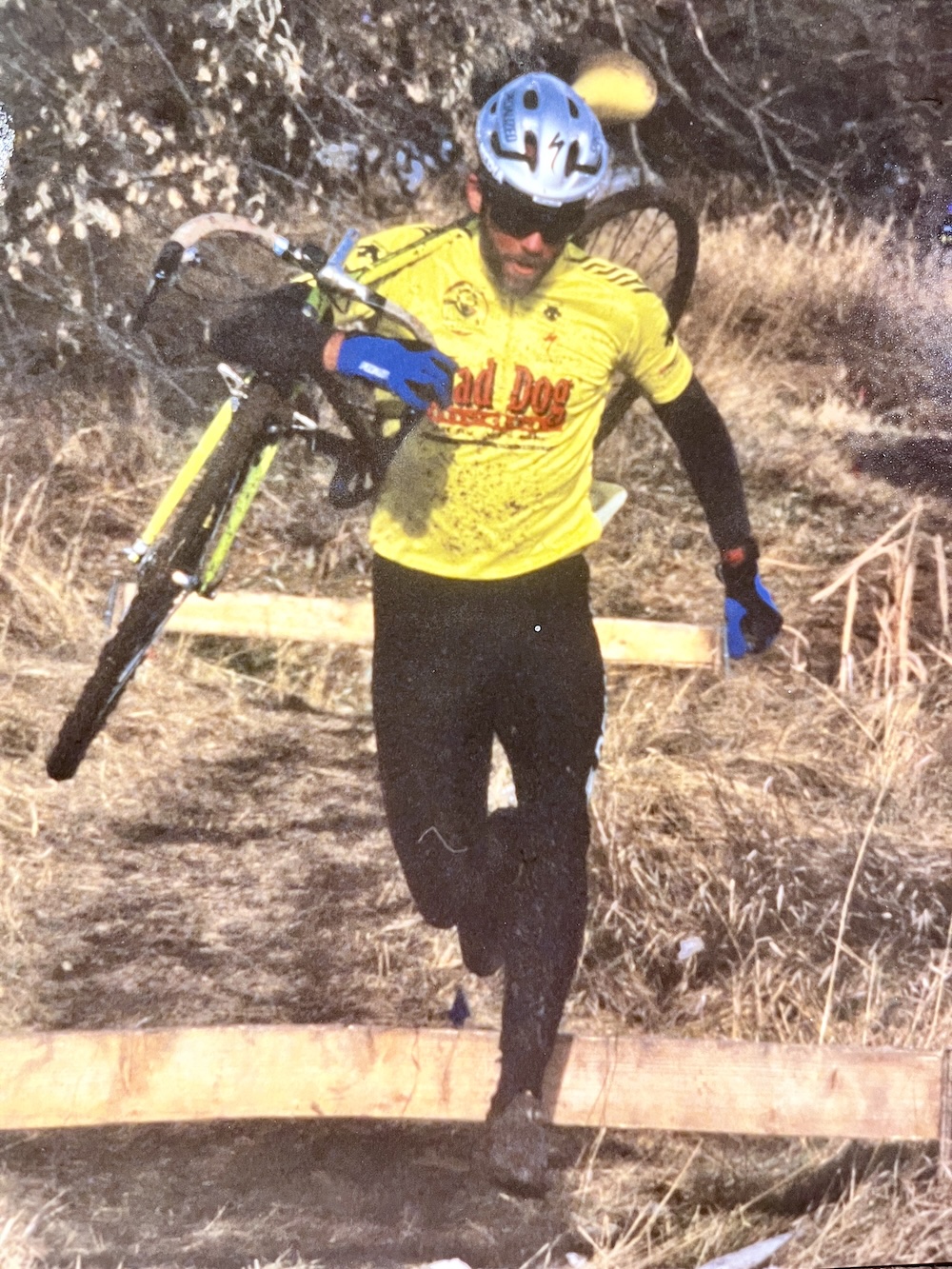
I did eventually get into sports, obviously. Bicycling was my gateway drug. I started cycling to lose weight, tackled the occasional century, and began watching what little of the Tour de France I could find on American TV. Eventually I entered a time trial, just to see what would happen, and the bug bit. To coin a phrase, I was off to the races.
When I quit newspapering to freelance for bicycle magazines I described it as a marriage of profession and passion. And I watched the marquee events the way my countrymen watched football, only with less frequency and considerably more difficulty. American TV didn’t cover bike racing the way it covered football — it was strictly soft-focus, personality-driven, 30-seconds-of-action fluff, centered on the Tour, with a soundtrack nobody could dance to, especially in cleats.
Some years later a cyclocross promoter once gave me a pirated videotape of a World Cup race that had been converted from PAL to NTSC so we Yanks could get in on the fun. It was like watching cyclocross underwater, through swim goggles, on acid. Dieter Runkel was pioneering top-mounted brake levers. John Tesh was conspicuous by his absence. I watched it over and over and over again.
But over the decades it got to be too much of a good thing to stay good. Everything I did to earn a living — reporting, writing, editing, cartooning, website maintenance, live updates — had something to do with bicycling. And I burned a lot of daylight doing those things instead of doing the actual bicycling. I quit racing, skipped group rides, and finally lost all interest in watching the races. Does a line cook watch cooking shows on his days off?
I knew bicycling was a business. One of the magazines I worked for covered the business of bicycling. After the Pharmstrong years anybody who didn’t know pro cycling was a business would definitely flunk a dope test. But it was starting to feel like bicycling was giving me the business.
In the end, I got my own dope-slap from the invisible hand of the market. The vulture capitalists swooped down and did what buzzards do — eat and shit, eat and shit — and as my earning opportunities dwindled my love for cycling rekindled. I quit watching, and got back to doing.
First to go was pro cycling. Leave that noise to The Wall Street Journal, I thought. Or The Lancet. And maybe Interpol.
Now I can’t remember the last Tour I watched. So you can bet the farm that I didn’t watch the Super Bowl yesterday. I don’t have any idea who won — hell, I don’t even know who played.
Herself tells me that the MVP was someone name of “Bad Bunny.” Bugs I know, but he played baseball and raced cross country, dabbled in bullfighting, even boxed a bit.
“Bad Bunny?” Jesus. And they call football a “sport?” At least pro cycling had Cannibals and Badgers.
* Hat tip to Jim Harrison, who was speaking of Boston in his book, “Wolf: A False Memoir.”
But hey, if we’re going to be dumb enough to elect a venomous orange man-baby as the Pestilence of the Benighted Snakes — twice! — I guess we deserve to be pig-ign’ant of what he’s doing, too.
Anyway, the only thing raving about shitty newspapers ever got me was an invitation — more than one, actually — to leave the one I was raving about and drag my surly ass off to some other shitty newspaper, posthaste, s’il vous plaît, don’t let the door hit ya where the good Lord split ya, etc. I managed my final escape from The New Mexican in 1991, one step ahead of the publisher’s spike heel, and that was that.
You regulars know the story. I had joined that paper in 1988 as a copy editor, then cycled (har de har har) through a number of gigs — assistant sports editor, assistant features editor, and finally features editor, doing a little cartooning and cycling reportage on the side — before taking it on the Jesse Owens in ‘91 to do as a freelancer what pretty much every Damon Runyon character did on Broadway, to wit: “the best he can, which is an occupation that is greatly overcrowded at all times. …”
Boy howdy.
Still, 15 years of newspapering set me up pretty well for freelancing, because while I wasn’t exactly great at anything, I had learned to be OK at a number of things: writing hard news, soft features, and commentary (and fast, too); editing other people’s work and proofing pages; drawing cartoons and taking photos. I would try just about any old thing for any old crook who could spell my name right on a check and remember to mail it while I could still remember what I did to earn it.
So there I was, just doing the best I could and plenty of it, because freelancing paid less than newspaper work, and the kind of newspapers that would hire a hairy pain in the ass like Your Humble Narrator didn’t pay shit. If you wanted to get a raise, you had to move to another newspaper, and without being kicked, too.
Or maybe that was just me.
Happily, freelancers basically pioneered the concept of “remote work,” which kept my pain from manifesting itself daily in various editors’ asses. For a while, anyway. I developed a long reach. Nevertheless, I managed to log 30 years as a freelancer, twice the time I spent raving my way through a half-dozen Western dailies and one weekly outfit, and only had to move four times.
And newspapers taught me how.
I liked newspaper work, when I wasn’t hating it. The people were smart, except for the ones who weren’t, and you could try your hand at damn near anything unless you wanted to get paid more for it, in which case nix. The shift was basically hours of fuck-all peppered with seconds of cardiac arrest and/or stroke and we had to remake the entire fucking product every fucking day.
And no do-overs. Once your mistakes were off the press and soiling the readers’ greedy little paws they were yours forever, like misspelled tattoos.
God, it was fun. Except when it wasn’t. But sometimes even then, too. Plus it fed and housed me for 15 years, and set me up for the next three decades.